
 by
by 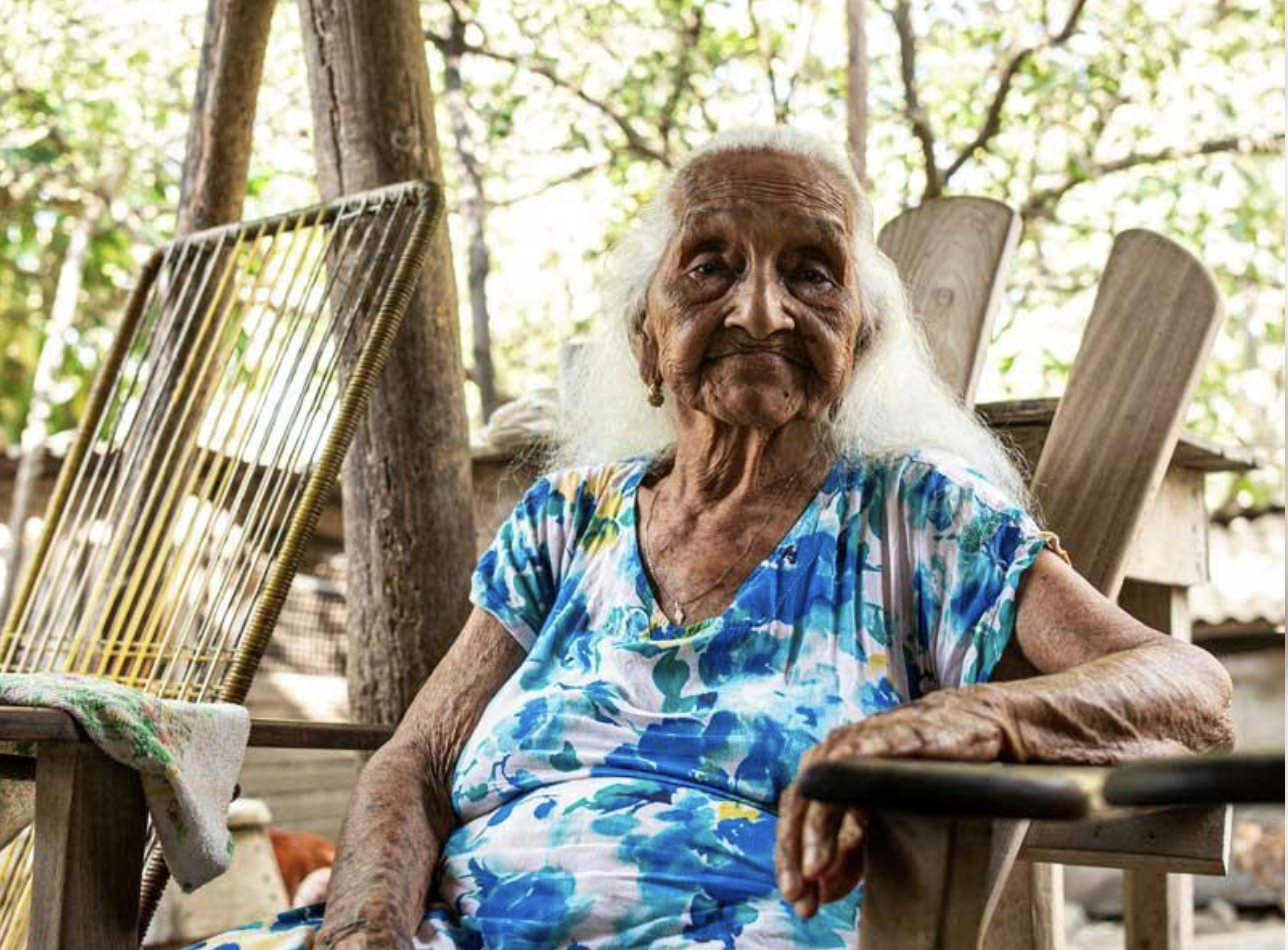
The Guanacaste Blue Zone: What Happened—and What We Can Still Learn From It
For years, Costa Rica’s Nicoya Peninsula has been celebrated around the world as one of the famous Blue Zones—places where people appear to live exceptionally long and healthy lives.
The image is irresistible: sunshine, fresh tropical food, strong families, active elderly people and a slower pace of life. Somewhere in the hills of Guanacaste, the story goes, a 95-year-old is still tending his garden, walking to visit a neighbor and drinking coffee before breakfast.
There is considerable truth behind that image. However, there is also a misconception worth addressing.
Simply moving to Guanacaste does not make you healthier, and living inside a “Blue Zone” does not automatically make you live longer.
In fact, more recent research suggests that Nicoya’s extraordinary longevity advantage has been diminishing. Nevertheless, that doesn’t make Guanacaste any less attractive as a place to live. Instead, it may teach us something much more useful.
The secret of the Blue Zone was never simply the zone. It was the way people lived there.
The Original Nicoya Blue Zone Was Real
First, it is important to separate fact from marketing. The longevity phenomenon discovered on the Nicoya Peninsula was not simply a tourism slogan.
Researchers studying Costa Rican mortality records found that older Nicoyan men had remarkably low mortality rates. Moreover, one of the most interesting findings comes from Costa Rican demographer Luis Rosero-Bixby, whose research has followed the longevity phenomenon across generations.
Men living in Nicoya who were born around 1905 experienced adult mortality approximately 33% lower than comparable Costa Rican men.
As subsequent generations were studied, however, something remarkable happened.
For Nicoyan men born around 1945, the pattern had reversed, with mortality approximately 10% higher than elsewhere in Costa Rica. Researchers also found that the geographic area showing the strongest longevity advantage had contracted considerably, with a remaining concentration around the Hojancha-to-Sámara area.
In other words, the original Blue Zone was real. Yet it was never necessarily permanent.
More importantly, the strongest longevity advantage appears to have been associated with particular generations and the lives they lived.
So What Happened to Guanacaste’s Blue Zone?
Drive through Guanacaste today and you are looking at a very different society from the one in which the famous Nicoyan centenarians grew up.
Their world involved physical labor, walking, farming, home-cooked meals, strong extended families and close communities. In addition, faith played an important role for many people, processed food was far less common and elderly family members often retained a clear role within the household.
Modern Guanacaste is different. Today we have supermarkets, cars, delivery services, smartphones, air conditioning, television, processed foods, sugary drinks and fast-food restaurants.
Of course, these conveniences have improved life in countless ways. At the same time, they have made it entirely possible to live a sedentary, modern lifestyle in the middle of a Blue Zone.
The geography remained, but the lifestyle changed.
Traditional Food Gave Way to Modern Food
The traditional Nicoyan diet wasn’t exotic. On the contrary, it was remarkably simple.
Beans, corn, rice, squash, fruit, vegetables, eggs and modest amounts of animal protein formed the foundation of everyday meals. Much of the food was prepared at home, while the overall diet contained plenty of fiber and comparatively little highly processed food.
Today, the picture is changing.
Researchers at the University of Costa Rica have warned that younger generations are moving away from these traditional eating patterns toward more Westernized diets containing greater quantities of highly processed and high-sugar foods.
Indeed, you don’t have to look very far around modern Guanacaste to see the difference. Fast food, soft drinks, packaged snacks and highly processed foods are now readily available.
The centenarians didn’t possess some secret longevity ingredient. There was no magical Blue Zone smoothie or miracle supplement.
There was just food.
Exercise Wasn’t Called Exercise
Another misconception about the Blue Zone lifestyle is that these people had discovered some special fitness regimen.
They hadn’t.
Instead, movement was simply woven into everyday life. People walked from place to place, tended gardens, cooked, swept, carried things, worked outdoors and cared for animals or crops. Visiting friends and neighbors could also involve getting there on foot.
As a result, physical activity wasn’t necessarily something scheduled for an hour at the gym.
It was embedded in life.
That distinction may be enormously important.
Today, for example, it is perfectly possible to wake up in Guanacaste, get into an SUV, drive to an office and sit behind a computer for eight hours. Afterward, you can drive home, order dinner and spend the evening looking at a phone.
Meanwhile, the Pacific Ocean may be only three kilometers away.
Your body doesn’t know that.
Faith, Family and Community Mattered Too
Faith and spirituality were also prominent features of traditional Nicoyan culture.
Costa Rica’s own descriptions of the Blue Zone include deep faith and spirituality, family networks, physical activity and purpose in life among the factors traditionally associated with the region’s longevity.
It would be an exaggeration, however, to claim that religion itself has been proven to cause Nicoyans to live longer.
Nevertheless, the broader ingredients surrounding faith are worth considering. Community, ritual, belonging, gratitude, family and service to others can all provide human connection. Furthermore, faith can offer something that is increasingly difficult to quantify in modern life: a sense that one’s existence has meaning beyond work and consumption.
The famous Costa Rican expression associated with the Blue Zone is plan de vida—a reason to get up in the morning.
You don’t necessarily need religion to have one.
But you probably need something.
Family May Have Been Part of the Medicine
Traditional Guanacaste family life also gave older people something that modern societies frequently take away:
Usefulness.
Grandparents weren’t necessarily separated from everyday family life. Instead, they might help prepare meals, watch grandchildren, offer advice or visit neighbors. In many cases, they remained active participants in the daily machinery of family and community.
Consequently, older people had opportunities for social contact and natural movement. Perhaps even more importantly, they retained a sense of purpose.
Modern life can provide tremendous independence. Unfortunately, independence can also quietly become isolation.
The old Nicoyan lifestyle offered something different:
Interdependence.
So Is the Guanacaste Blue Zone Disappearing?
In the demographic sense, the answer appears to be yes, at least partially.
The extraordinary longevity advantage documented in older generations has diminished considerably among subsequent generations.
However, that doesn’t mean the original Blue Zone was fictional. Nor does it mean that people in Guanacaste no longer live exceptionally long lives.
Instead, it suggests something far more interesting.
Blue Zones may not be permanent geographic properties.
Rather, they may be the product of culture, environment and a particular way of living. Therefore, when the way people live changes dramatically, the health statistics may eventually change as well.
The Blue Zone Was a Lifestyle, Not a Magic Location
Perhaps we’ve been looking at the Blue Zone phenomenon backwards.
Instead of asking, “What is it about this place that makes people live so long?” perhaps we should ask a different question:
“How did the people in this place live?”
A generation of Nicoyans grew up under a remarkable combination of circumstances. Natural movement was part of everyday life, while food remained relatively simple. Family connections were strong, communities were close and many people had a deep religious faith.
Furthermore, people spent enormous amounts of time outdoors. Older adults often remained useful and involved as they aged, while the concept of a plan de vida gave life a continuing sense of purpose.
Then society changed.
Transportation became easier, food became more processed and work became increasingly sedentary. Meanwhile, family structures, entertainment and technology evolved dramatically.
As a result, daily physical activity declined and traditional eating patterns began to disappear.
Gradually, the longevity advantage changed as well.
Perhaps that isn’t evidence against the Blue Zone concept.
Perhaps it is some of the strongest evidence for its underlying lesson.
Can You Still Live a Blue Zone Lifestyle in Guanacaste?
Absolutely.
And this is where the story becomes much more positive.
Many of the ingredients that helped create the original lifestyle are still readily available throughout Guanacaste. For example, the climate makes outdoor activity possible during virtually every month of the year.
A morning might begin with a walk along the beach or a swim in the Pacific. Later, you might surf, garden, ride a bicycle or simply spend more time outdoors.
Meanwhile, fresh tropical fruit and vegetables remain readily available. Local ferias offer produce, while traditional staples such as beans, rice, corn, eggs and locally produced foods can still form the basis of an uncomplicated diet.
Equally important, Guanacaste still provides opportunities to know your neighbors, learn Spanish, join a community and spend meaningful time with friends and family.
In other words, a slower and more connected way of living remains possible.
Guanacaste makes those choices remarkably accessible.
However, it doesn’t make them for you.
You Can Live an Unhealthy Life in Paradise
This may be the greatest Blue Zone myth of all.
Location cannot compensate indefinitely for lifestyle.
For example, you can live 500 meters from one of the world’s most beautiful beaches and rarely walk on it. Likewise, you can live surrounded by fresh tropical produce while eating packaged food every day.
Perfect weather doesn’t guarantee physical activity either. Someone can live in a climate suited to year-round outdoor living and still spend most of the day in an air-conditioned room.
Similarly, living among friendly people does not automatically prevent social isolation.
Perhaps most importantly, someone can move to Costa Rica looking for a simpler life and eventually recreate exactly the same stressful existence they left behind.
Paradise provides the opportunity. It does not provide the discipline.
Creating Your Own Blue Zone Lifestyle
Now imagine approaching Guanacaste differently.
Perhaps you wake with the sun and start the morning with a 30-minute walk along the beach. Afterward, breakfast might consist of eggs, gallo pinto and fruit rather than highly processed food.
Work still matters, of course, but it doesn’t have to consume your entire identity. Instead, swimming, surfing, walking or another physical activity can become part of the rhythm of the week.
At the same time, social connection can become intentional. Knowing your neighbors, maintaining friendships across generations and spending time with family all help create a sense of belonging.
Food can remain simple as well. Eating at home more frequently, choosing real food and drinking mostly water rather than sugary drinks don’t require an elaborate longevity program.
Finally, there is purpose.
Having a reason to get out of bed every morning may be one of the simplest lessons inherited from traditional Nicoya.
None of these behaviors guarantees that you’ll live to 100. Genetics, healthcare, socioeconomic circumstances and plain luck all matter.
Nevertheless, many of these habits are associated with healthier aging.
And Guanacaste happens to be an exceptionally pleasant place to practice them.
Maybe This Is the Real Lesson of the Nicoya Blue Zone
We shouldn’t think of the Blue Zone as an invisible longevity force hovering over the Nicoya Peninsula.
Instead, think of it as an extraordinary natural experiment.
A generation of people lived under a particular combination of circumstances. Natural movement was unavoidable, food was comparatively simple and family relationships remained central to daily life. In addition, communities were close, faith was important to many people and much of everyday life took place outdoors.
Older adults often remained useful as they aged. Above all, many retained a plan de vida—a reason to continue participating in life.
The world around them eventually changed. Subsequently, younger generations increasingly adopted the habits and conveniences of modern life.
The longevity statistics changed too.
Therefore, the most valuable lesson of the Blue Zone may not be about geography at all.
It may be about how we choose to live.
Is Guanacaste Still a Great Place for Healthy Living?
We think the answer is emphatically yes—but perhaps not for the reason people expect.
Moving to Guanacaste will not magically make you healthy.
However, it can make a healthier way of living remarkably accessible.
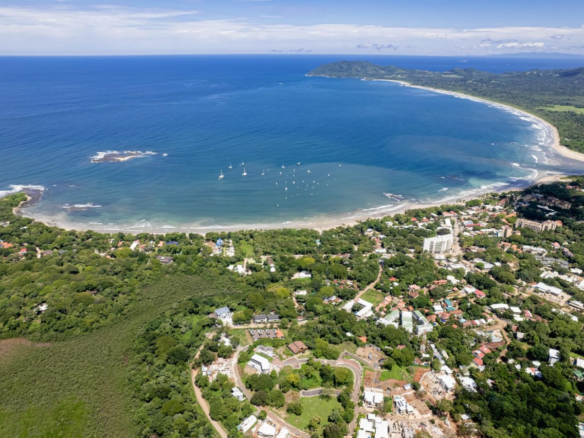
Here, the outdoors isn’t something you necessarily have to drive two hours to find. Instead, the Pacific Ocean, beaches, mountains and tropical dry forest can become part of everyday life.
A person can walk in the morning, swim in the ocean, surf, cycle or garden. In addition, locally grown food is readily available, and the climate allows people to spend much of the year outside.
Of course, you can also choose the opposite.
That may be the most important lesson from the changing Nicoya Blue Zone.
Where you live matters. But how you live there matters considerably more.
The original Nicoyan centenarians didn’t set out to create a longevity program. Rather, they lived within a culture that naturally incorporated many of the things we now associate with healthy aging: movement, relatively simple food, family, community, purpose and connection.
Modern Guanacaste cannot recreate the world in which they grew up.
Nor should it try.
Fortunately, many of the ingredients remain.
For those of us fortunate enough to live here—and for people considering making Guanacaste their home—the challenge is to actually use them.
Walk the beach and get in the ocean. Eat real food and stay connected to your family. Get to know your neighbors, keep moving as you grow older and find something that genuinely matters to you.
Most importantly, have a plan de vida.
Perhaps the greatest lesson of the Nicoya Blue Zone isn’t that living in a certain place can make us live longer.
Instead, it’s that the way we choose to live may matter as much as the place we choose to call home.
And Guanacaste remains a pretty extraordinary place in which to make that choice.

Join The Discussion